student mental health

The City of Seattle is watching you

Surveillance News:

First off, I’ll share my piece on Seattle’s surveillance expansion. City Council passed the legislation to implement this expansion on a 7-2 vote on Tuesday. Yesterday I heard about a website that some concerned citizens put up with a good round-up of media coverage of the vote.

Lavender Rights Project, Seattle Pride, and the Seattle DSA have made social media posts against the expansion. Lavender Rights Project wrote, “Lavender Rights Project is located directly within the zone of this projected surveillance expansion. Yet no impact analysis was conducted, nor was robust effort made to engage with our staff, or the communities we represent–those who will be most affected by these decisions. This disregard highlights exactly whose safety is prioritized, and whose lives are put at risk.”

This flier was also spotted in Capitol Hill:
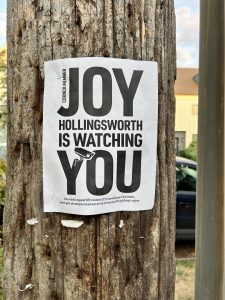
In other surveillance news, DivestSPD found that state and federal law enforcement officers are sharing license plate data on obscure Seattle police email lists. 

The Intercept reported on how the company Fusus connected City of Seattle officials, including Claudia Gross-Shader from the Auditor’s Office, to a man, Marshall Freeman, who they introduced as the deputy chief administrative officer of the Atlanta Police Department. What Fusus neglected to tell the City was that Freeman is a member of their board and owns a small share of the company. The City didn’t find out until recently; in the meantime, Seattle bought Fusus’s real-time crime center software for an estimated price of $1.8 million. 

The kicker? “Gross-Shader also noted that the city had not seen research demonstrating the ability of Fusus’s technology to play a significant role in reducing retail theft, the issue that originally brought her to look into the company.”

Flock Safety, known for its extensive nationwide network of license plate readers, has rolled out a new feature that analyzes driving patterns to determine “suspicious” behavior and flag people as potential participants in organized crime. The ACLU writes about several reasons why this is concerning.

Forest Park, a city in Illinois, gave U.S. Customs and Border Patrol access to their license plate data. This example is noteworthy because Forest Park doesn’t use Flock Safety license plate readers, which have been garnering a lot of press recently. Their license plate readers are provided by Motorola Solutions, showing the dangers of this technology aren’t a matter of a single problematic vendor. 

Finally, Waymo self-driving cars are now being tested in the Seattle area. I know self-driving cars are a controversial issue and there are many big fans of the technology out there, but I would be remiss not to point out the surveillance capabilities of these vehicles, with LAPD and other police departments obtaining surveillance footage from these cars and using it as evidence. You can read 404 Media’s reporting about that here.  

Seattle News:

Earlier this month, I wrote about the opening of the new post-overdose stabilization ORCA center across from the King County courthouse. DESC, the organization that runs the new center, is also pioneering a different medicine treatment protocol for opioid addiction that thus far seems to be easier for people to tolerate. 

Last week, Seattle’s long-lasting consent decree finally came to an end. Mayor Bruce Harrell also announced he expects to finish negotiating a new contract with SPOG by the end of the year, about which he is very optimistic. We’ll see what he trades away to keep the CARE responders in existence. 

Harrell announced that as of the first day of school, the City has now hired more than 40 additional mental and behavioral health professionals across Seattle Public Schools (SPS) middle and high schools, for a total of over 60 mental health staff. You can read the press release about safety measures at SPS here.

Speaking of SPS, there will be a key board meeting on Wednesday, September 17 at 4:15pm where school board members are expected to vote on a pilot bringing a police officer back into Garfield High School.

Today Harrell announced $1.7 million in awards to expand services for survivors of commercial sexual exploitation (CSE). Organizations that received awards are the Organization for Prostitution Survivors, the Seattle Indian Health Board, Real Escape from the Sex Trade (REST), and Consejo Counseling and Referral Service. Notably absent from the list is one of former Councilmember Cathy Moore’s favorite providers, The More We Love.

King County and Washington State news:

This week, the King County Council voted in favor of moving forward the process of buying and opening a crisis care center in Capitol Hill. 

Washington Supreme Court Justice Mary Yu announced her retirement at the end of the year. Governor Bob Ferguson will appoint a replacement to serve until an election next year, where candidates will run to finish Yu’s term, which goes until the end of 2028. 

Washington Supreme Court justices are required to retire the year they turn 75 years old. Associate Chief Justice Charles Johnson will be turning 75 in 2026, and Justice Barbara Madsen will be turning 75 in 2027. With three Supreme Court seats up for grabs in the next few years, these upcoming judicial elections will shape the future of Washington state. 

Recent Headlines:

The City of Seattle is watching you Read More »

SPD has a new chief and the Seattle City Council and the King County Council have new councilmembers

Seattle News:

We have a new police chief in Seattle! Today was Chief Shon Barnes’s first official day at SPD. I expect to go into more depth about this next week, but this week I highly recommend reading the excellent interview with Barnes at PubliCola. The Seattle Times also shares some interesting information about Barnes.

We also have a new City Councilmember. The Council appointed Mark Solomon, a crime prevention coordinator at SPD, to fill the District 2 seat, which was vacant following the resignation of Tammy Morales. Solomon ran against Morales in 2019 and lost by 21 points. He doesn’t intend to seek reelection to the seat this November.

PubliCola reported that Solomon said he intends to address the drug market at 12th and Jackson through Crime Prevention Through Environmental Design. From the article: “CPTED is a set of strategies designed to send signals that a location is hostile to crime, such as bright lights, surveillance cameras, tall fences, and the removal of trees and bushes that people might be able to hide behind.”

Councilmember Alexis Mercedes Rinck proposed the creation of a Select Committee on Federal Administration and Policy Changes. In a statement, she said, “I am proposing a dedicated select committee to identify strong local responses to changes in the federal government which threaten funding to the City of Seattle.” 

Council President Sara Nelson has agreed to set up this new committee, but its first meeting won’t be until March.

DivestSPD reported that West Precinct Captain Steve Strand violated SPD’s crowd management policy last July: “The OPA pointed out that Strand escalated things by kicking over protest props, tearing down banners, and opening the road to traffic without attempting to resolve the situation through other means outlined in the policy. Instead of attempting “to use organizers and monitors to gain voluntary compliance,” Strand arrested one of the two police liaisons.”

Strand, who has been with SPD for more than 30 years, received training referrals as a result of his actions.

This is particularly relevant given the discussion about SPD’s crowd management policy and use of less lethal weapons going on in City Council right now. The final vote on the less lethal weapons legislation has been postponed and will not be held next week; instead it will probably take place at the full council meeting on Tuesday, February 11 at 2pm. 

Real Change reported that Seattle Public School students still aren’t feeling like their mental health is well supported at school and haven’t noticed any promised changes. In December, the City announced a new pilot program for youth civic engagement. 

This week the City announced seven local provider partnerships to provide more mental health services to students, both virtually and in-person. These new partnerships should begin to provide these services early this year. 

We also have a couple new lawsuits against the City to talk about. First is a lawsuit filed two weeks ago by Lacey Gray, who used to be the records manager at the Office of the Inspector General (OIG). Gray was fired last November, and she says it was in retaliation for her raising concerns that Inspector General Lisa Judge and the office might have engaged in illegal actions in handling and distributing records pertaining to former SPD Chief Adrian Diaz. 

And second is a lawsuit filed by independent journalist Glen Stellmacher, alleging that SPD illegally withheld records requested under the Public Records Act. He sued SPD last year as well for similar reasons.

Lastly, some late-breaking news from The Seattle Times on Pierce County’s new sheriff, Keith Swank: “If he were still with the Seattle Police Department, former Capt. Keith Swank would have been fired for inflammatory social media comments he made in 2023 disparaging transgender people and defending the Jan. 6 insurrection, according to a disciplinary report released Friday.”

King County News:

King County Council selected De’Sean Quinn to be their new councilmember this week, taking the District 5 seat of Dave Upthegrove, who left to become the state’s Commissioner of Public Lands. Quinn was an Assistant General Manager at King County Metro and a member of the Tukwila City Council before this appointment. 

The Urbanist reported that Quinn said the following about public safety in the County:

““I think we need new revenues, because I think right now more than [at] any time, people need to feel safe. I think now more than any time as a community, looking out for one another, safety should be at this also at the center of our communities and their growth,” Quinn said, noting that cost is a significant hurdle in being able to advance non-police alternatives that improve public safety. “I think continuing to advance [public safety] alternatives is an idea that one is a kind of a difficult one, I would say. And I think we’re all experiencing that as well, because a significant portion is personnel cost.””

WA State News:

My latest piece at The Urbanist goes over some of the interesting public safety bills being discussed during the state legislative session this year. I should highlight the word “some” in that previous sentence, as I didn’t have space to discuss half of what’s on the table. However, I did include the police officer staffing grants, the potential assistance to the public defender crisis, several gun control bills including a gun tax, the Traffic Safety Bill, and the Public SAFE-T act, known last year as the judicial dismissal bill. 

In other interesting state legislature news, the House Democrats passed new rules that will allow filibusters to be ended by a simple majority instead of a two-thirds vote. This matches a similar rule already in place in the Senate and takes away a major tool of the minority party to stall, thereby meaning less overall legislation can be passed in a given session. 

In Praise:

I’m watching several movies available streaming online through the Sundance Film Festival this weekend. It’s early days, but so far my favorite is the movie Bubble & Squeak, which is a screwball comedy in the tradition of Bringing Up Baby combined with absurdist sensibilities and many, many cabbages.

Recent Headlines:

SPD has a new chief and the Seattle City Council and the King County Council have new councilmembers Read More »

More ghost cops found in Seattle’s budget as Council wonders how their “new crimes” will impact expenses

Seattle News:

On Monday, the budget committee heard issue identification presentations from their Central Staff on SPD (memo), the CARE department (memo), SFD, and LAW (memo), which in addition to the City Attorney’s Office also included issues related to the Seattle Municipal Court (SMC). 

SPD:

It turns out there are more ghost cop positions than SPD’s Executive Director of Budget and Finance Angela Socci admitted to in SPD’s budget presentation a few weeks ago. Who would have thought! A reminder that SPD Captain James Britt also gave extremely misleading statements a few months ago about SPD’s current real time crime center, saying it had never been operational when there is proof it was being used back in 2020. 

Central Staff identified 35 additional ghost cop positions in the proposed budget, which account for an additional $6.5 million per year. In the proposal, SPD has 1076 FTE funded for sworn officers, but based on their hiring and separation estimates won’t be able to get past 1041 FTE. 

Per Greg Doss from Central Staff, 154 FTE from SPD were immediately not funded, 23 FTE were unfunded to put $4.3 million back into the General Fund, and 23 FTE were unfunded to provide $4.3 million for more SPD overtime. This is how the 1076 number was reached.

SPD is also receiving an additional $10 million in overtime for “emphasis patrols” in 2025, but that amount is not yet included in the 2026 budget. Doss suggested Council might want to spend the newly found $6.5 million on providing $10 million in additional overtime in 2026. 

No mention was made of the $1.5 million for hiring bonuses that Socci had indicated in the previous SPD presentation was also being funded by salary savings. 

Council President Sara Nelson said the council has “created a few new crimes” and wondered why overtime wasn’t projected to go up even further as a result. 

The parking enforcement officers (PEO) also have 19-20 vacant positions (out of a total 104). One suggestion was to use some (or all?) of this salary savings to fund two new training positions to help streamline the PEO hiring and training process. 

Council also discussed SPD’s 30×30 initiative, which has a goal to hire more women officers at SPD. There will be a more detailed presentation on this initiative at the end of the year after budget season is over. Possible measures being discussed are more flexible work schedules and flexible round-the-clock child care. 

Councilmember Robert Kettle took the opportunity to once again blame the previous council for current staffing at SPD.

CARE:

Central Staff explained that the CARE dual dispatch has been difficult to implement because the CARE team is designed to respond to Priority 3 and 4 calls, but they have been located in places with a large call load of Priority 1 and 2 calls. This means officers aren’t available to be on the scene for the lower level calls, preventing CARE from doing anything but sitting around and waiting for them, often for so long that they are no longer needed once SPD arrives. 

Thus far CARE has only been dispatched less than twice per month. They are more often requested as a secondary response, often to provide transport. 

However, starting on October 8, CARE made operational changes to proactively drive around and respond to “quasi-medical calls,” increasing their activity. However, Health One will soon begin responding to behavioral health calls so there is some confusion as to the distinction between Health One and the CARE team.

The CARE team has been limited to the dual dispatch model due to the SPOG contract. 

Another policy consideration was related to data collection by CARE, which isn’t as robust as hoped, at least partly because the team is being dispatched so infrequently. The council is considering a state of legislative intent (SLI) to have CARE develop more robust data collection.

A new Seattle Restoration Director position is also being added to CARE. This person, who has already been hired, is coordinating the work done by the Downtown Activation Team (DAT) and might have a much expanded role in future to help re-envision 911 response in the city with the potential for many different services/people to be dispatchable. 

Kettle said the City needs to take SPD from being so central to its public safety response. He mentioned the roles that public health and public services have to play in public safety overall,

LAW and SMC:

LAW is worried because they will potentially be losing two civil attorney positions and one criminal attorney position in 2025. In addition to keeping that criminal attorney, they’d like to hire an additional “floating prosecutor.” 

Central Staff also identified that additional funding for implementation of new policies enacted in 2024 such as SOAP, SODA, the new street racing ordinance, the re-criminalization of prostitution loitering, and the new SCORE jail contract, has not been included in Harrell’s proposed budget. 

SMC has said they will probably need an additional $196,000 in 2025 and $520,000 in 2026 to transport defendants to and from the SCORE jail. Otherwise they would need to spend even more money for a new judicial department that could manage all the virtual hearings for those housed at SCORE. 

Kettle said he is worried about the health of the “criminal justice system.”

Other Seattle News:

The city council also received the updated revenue forecast for 2025, which was mixed. JumpStart and REET revenue looks like it will be slightly up, but General Fund revenues will be down by around $20 million (driven by lower sales and B&O taxes), a further gap for the city council to fill. 

This week the new police officer training academy in Arlington celebrated a soft opening. The facility is expected to be open fully by 2025 and could speed up training times for police officers.

The results of the gender-based violence prevention services investment passed in the 2024 budget have finally been announced. 

The Stranger drills down deeper on the new less lethal weapons legislation being proposed by Harrell, including a lift on the blast ball ban. You can read some of the justification being presented for this proposal in my consent decree article from last week. 

A Washington state defense attorney, John Sheeran, has been indicted for allegedly smuggling drugs into the King County Jail. Drugs he is accused of smuggling include methamphetamine, ketamine, buprenorphine, and THC. He was the defense attorney who initially represented Ed Troyer, the Sheriff of Pierce County, in the suit regarding the Black newspaper carrier. Troyer is not running for reelection this year.  

The Seattle Student Union is asking for more money in the Seattle budget for student mental health services and also wants a student advisory council to be established to have a larger voice in how any money is spent. 

Other Stories:

Austin Field writes about the new public defender caseload standards that are currently being considered by the state Supreme Court. He argues that public defenders are the main line of defense against law enforcement vigilantism. He writes: “To be clear, reducing public defender workloads isn’t about Republicans versus Democrats or even prosecutors versus defenders—some prosecutors acknowledge the need for better public defense. This caseload fight is about democracy versus authoritarianism.”

You can provide public comment to the Court about this matter here. 

Meanwhile, a Washington state watchdog office recently published a report finding that prisoners in solitary confinement in Washington state aren’t receiving basic quality-of-life care and are subject to “dehumanizing and traumatizing” restraint practices. 

Unsurprisingly the Washington Department of Corrections argues that they need more money to make progress on their goals related to solitary confinement. 

The Washington State Standard reports:

 “But Seevers, with Disability Rights Washington, said that there are several easy policy changes that the agency can make to reduce solitary confinement without additional funding, such as raising the standard of proof for infractions, as people are often put in solitary confinement while awaiting a decision on disciplinary action. “DOC has demonstrated that they’re not going to make changes unless there’s a legislative mandate for them to do so,” Seevers said.” 

Recent Headlines:

More ghost cops found in Seattle’s budget as Council wonders how their “new crimes” will impact expenses Read More »

Seattle City Council considers undoing more of the work of their predecessors

This time their focus is on the JumpStart spending plan, participatory budgeting, and less lethal weapon legislation.

Seattle News:

First off, this week Judge James Robart held his annual hearing to determine the status of Seattle’s consent decree. I wrote about it in detail here. Of note, the Mayor’s Office just transmitted new legislation to the City Council that would replace the less lethal weapons ordinances passed in 2020 and 2021 in response to SPD’s violence during the George Floyd protests. 

This new legislation would remove the personal right of action from people harmed from less lethal weapons, allow mutual aid partners (law enforcement agencies other than SPD who come into Seattle to help out) to use less lethal weapons, and leave it up to the discretion of SPD policy as to which particular less lethal weapons they can use. It complies with the state law about the proper use of tear gas and adds a few additional restrictions. 

During the consent decree hearing, Judge Robart praised the OIG, their work, and their independence. But a recent article in The Urbanist questioned that very independence, as an OIG-planned audit on policies of use of SPD mutual aid was ultimately downgraded to a short review.

This week the Seattle City Council has started their budget issue identification meetings. You can look at presentations about JumpStart, HSD (memo), the Unified Care Team, and Participatory Budgeting (memo), among others. Presentations on SPD, the CARE team, Seattle Fire Department (SFD), and the City Attorney’s Office (LAW) will be given on Monday.

I’ll be writing more about the newly proposed JumpStart legislation soon, but in a nutshell, the new legislation would add the General Fund as an approved use of JumpStart funds (along with the original purposes of affordable housing, Green New Deal, equitable development, and small business, and newly added student mental health). Further, the legislation would do away with any percentage mandates for each category. In practice, what this means is that in future, the Mayor and/or Council could use 100% of JumpStart dollars for General Fund purposes.

For participatory budgeting, the public voted on six different projects that are to receive $27.3 million worth of funding. During this budgeting season, the Council needs to pass legislation to implement the program and allow the funds to be appropriated to the relevant departments. Otherwise, the projects won’t go forward as planned.  

You can read my live tweets of this meeting here. Councilmembers expressed concerns that the chosen projects do not obviously benefit Black communities as much as they think they should. They expressed particular confusion over the presence of the CARE alternative response team expansion as one of the projects, apparently forgetting that one of the reasons advocates originally wanted alternative 911 response was to limit the interactions of BIPOC community members with the police, especially given SPD’s history of biased policing. 

On the other hand, some councilmembers expressed the need to fulfill commitments made to community since 2020. To go back now on projects that the community voted on in a City-approved process would be quite a bold decision that would likely lead to the erosion of community trust. 

However, councilmembers did ask about the possibility of only funding some of the projects voted for by community. Budget Chair Strauss suggested the possibility of adding funds to include more dollars for projects that would benefit communities of color. 

During the HSD presentation, councilmembers had some questions about the $2 million allocated for commercial sexual exploitation interventions. There was a suggestion that the 5 proposed new staff positions within HSD to support survivors and interventions was perhaps too many, although having one position to coordinate the work could be of value. There was interest in instead giving a larger proportion of the money to community-based organizations.

Councilmembers also had a lot of questions about the $4.25 million investment in school-based violence intervention services, the proposal for which originated with the Mayor’s Office’s plans for the $20 million for student mental health passed last year through a tiny increase to the JumpStart tax. A lot of details about these services remain to be decided by HSD, which gave certain councilmembers some pause, even while they all agreed that gun violence in schools is an issue of utmost importance. 

There was also some confusion about the difference between this new program and the Seattle Community Safety Initiative (SCSI) that began in 2020. One of the key differences between the two programs is that the SCSI is community and neighborhood based, while the new program is school-based, with violence intervention specialists and case managers imbedded within 11 chosen target schools. Another key difference is that the focus of the SCSI is more towards response, while the focus of the new school program is more about prevention and interruption, meaning the goal is to stop the violence before it happens whenever possible.

King County News:

King County is also going through their budget cycle. While they usually pass a biennium budget, this time around they are passing a budget for the single year of 2025. 

This week they held their second budget panel on public safety, where the King County Sheriff Office (KCSO) gave a presentation about their budget priorities. KCSO now has 71 vacancies, down from a high of 120 vacancies in the summer of 2022. 

The committee then went through a list of several questions they had from last week’s meeting. You can download the informational packet about various budget questions they were considering here. 

One issue that stood out was that the Department of Adult and Juvenile Detention (DAJD) is planning a gap analysis to better understand the gaps of service faced by juveniles having longer stays in the youth jail. The youth jail was originally designed to be for short term detention only, but the recent trend has been for youth to experience much longer stays at the site. However, this DAJD analysis isn’t due until later next year to be addressed in the 2026-2027 budget, even though these kids have already been suffering and this problem has already been identified for some time. Councilmember Jorge Baròn said he would work with the DAJD to try to move up that timeline because as it stands, any actual action to improve the situation wouldn’t take place until well into 2026. 

Also being considered is the increased funding need of the Department of Public Defense (DPD) given the bar association’s newly adopted standards for public defenders that is reducing the caseloads of attorneys. This drop of allowable caseloads will mean the need for more attorneys to cover the same number of cases. 

The Stranger recently interviewed newly appointed interim director of the DPD, Matt Sanders, who talks about the current public defender crisis in the state of Washington and how you can weigh in as the state Supreme Court considers the matter. 

Recent Headlines:


Seattle City Council considers undoing more of the work of their predecessors Read More »

Criticism of the Council’s new proposed drug and sex work laws continues

Happy Seattle City Council recess! Let’s take a look at what’s been going on the last few weeks.

Seattle’s proposed SODA/SOAP laws:

Perhaps the biggest local public safety story of the past two weeks has been the proposed SODA and SOAP legislation. You can read my summary and analysis of the two bills over at The Urbanist. 

KUOW reported on the differences in crime rates on Aurora in Shoreline as opposed to Seattle:

“[Jim Hammond] pointed to the 8-foot-wide sidewalks, and medians planted with trees, which he said can prevent collisions and provide more safety for pedestrians. These and other upgrades took twelve years and cost $140 million dollars. But Hammond believes they do more to deter prostitution and other types of disorder than the city’s criminal penalties.

“Environments matter,” he said. “If it looks well cared for, and you know people are going to continue to care for it, it just has a different effect on the behavior people are going to engage in in that space.””

The South Seattle Emerald ran an opinion piece discussing the harm caused by a video Councilmember Cathy Moore screened at an open city council committee meeting that showed sex workers walking up and down Aurora Avenue without their consent.

PubliCola did an analysis showing that focusing on “johns” or sex buyers has not historically reduced sex work taking place on Aurora and has a disproportionate impact on Black and Latino men. It also found from court data that SOAP orders were rarely enforced against men. The article quotes Gordon Hill, deputy director at the King County Department of Public Defense as saying, “I think what this law does is going to be incredibly disproportionate. It’s going to be people with immigration challenges, it’s going to be poor people, it’s going to be people of color. So the degree to which it works at all is only going to [exacerbate] the inequities in our criminal legal system.”

Overall there has been a lot of resistance to the proposed SOAP bill. Less featured in articles has been the similar SODA bill that targets downtown and CID drug users. But this bill also has concerning ramifications, as I explain in my article:

“The SODA bill would make it much easier for the City Attorney’s office to criminalize poverty and substance abuse disorder. As it stands now, when someone is arrested for public drug use, their drug use must be proven in court. This requires sending samples to the Washington State Patrol Crime Laboratory, which is currently backed up. But if someone is put under a SODA order, they can later be arrested for violating that order, and their drug use never has to be proven in order for them to be convicted of a gross misdemeanor.”

The Martin Luther King Jr. County Labor Council just adopted a resolution against both these pieces of legislation. 

The public safety committee will take up these two bills again on Tuesday, September 10. 

Other Seattle News:

I also had a piece in The Urbanist about the newly announced school safety plan for the 2024-2025 school year. 

Here are the investments being made:

  • $5.6 million for additional school-based mental health counselors and a health coordinator totaling 42 new positions (City of Seattle)
  • $2.4 million for telehealth therapy services (City of Seattle)
  • $4.25 million for violence interruption programs in partnership with community-based organizations, including safe passage programs, new violence intervention specialists working directly out of focus schools, individual case management for those students most likely to experience gun violence, and a new family resource fund. (City of Seattle)
  • $2.3 million for increasing staffing on the safety and security team, including hiring an executive director of student and community safety, and school infrastructure such as cameras, perimeter fencing and gate improvements, and classroom door lock enhancements (Seattle Public Schools)

The city’s $12.25 million investment is all coming from the tiny increase in the JumpStart payroll tax passed by the city council during last year’s budget deliberations. However, both the Mayor and the Council declined to spend the full $20 million amount available this year in spite of students’ urgent requests for further assistance. It will be interesting to see if the full $20 million amount is included in Mayor Bruce Harrell’s proposed budget coming out on September 24.

The Community Police Commission (CPC) continues to implode. PubliCola announced on August 23 that the CPC had hired an acting director to fill in for current Director Cali Ellis, who is on administrative leave. Then, less than a week later, PubliCola reported that the new acting director is already leaving for a new position.

Former SPD Chief Adrian Diaz is still classified as Police Chief three months after his removal from the position and is still being paid more than $28,000 per month. Interim Chief Sue Rahr is also being paid, and the total annual compensation for keeping both Chiefs on the books would be almost $700,000. It’s enough to make one wonder how concerned City Hall really is about the upcoming budget deficit.

The new city council continues to receive high levels of criticism for behavior opponents characterize as “undemocratic.” 

The Stranger ran down many of the issues, flubs, and concerning choices coming out of the council so far this year:

“After the City’s unofficial legislative session ended this month, it doesn’t look like the council pleasantly surprised any of their progressive constituents. Instead, the council steamrolled them, stifled them, betrayed them, belittled them, and arrested them–all in the service of a wealthier, older, and whiter Seattle. The only pleasant surprise came in the form of the body’s incompetence and fragility, which delayed some of its most egregious attacks on working people and the poor.”

And an op-ed in The South Seattle Emerald states:

”Policy disagreements can be intense, but we expect our civic leaders to avoid making it personal and focus on legislating. Despite their repeated commitments and pledges of “good governance,” this does not appear to be a core value of the current council majority.”

King County News

The King County Council has been having an interesting week when it comes to youth detention. The Law & Justice committee was slated to once more discuss their legislation changing definitions of what constitutes “solitary confinement” for youth. However, they chose to defer that discussion to allow for feedback from the Department of Adult and Juvenile Detention (DAJD). King County will soon enter their budget season, meaning if they don’t hold a special meeting, the council committee won’t be able to take up this work until after a new budget has been approved later in the fall.

The King County Council also passed a non-binding resolution proposed by Councilmember Reagan Dunn committing to keep the Patricia Clark Children and Family Justice Center open. This is in opposition to Executive Dow Constantine’s 2020 commitment to close the youth jail, a promise he postponed earlier this year. All councilmembers voted in favor of the resolution except Councilmember Teresa Mosqueda, who was absent.

As PubliCola reported: “As of today, there are 59 young people, from 12 to 18 years old, incarcerated at the youth jail, with another 48 on electronic home detention; 61 percent of them are Black.”

King County Metro reported on their highest one-day total ridership in the last four years. About safety, they said: “Security incidents in 2023 were down 12% from 2019 (before the pandemic) and down 22% from the peak in 2020. Drug-related incidents in April 2024 were down 55% from April 2023.”

Recent Headlines:


Criticism of the Council’s new proposed drug and sex work laws continues Read More »

Seattle City Council Gets a Little Bit Messy

Seattle News:

First off, allow me to highlight my article last week at the Urbanist about the new rushed SCORE jail contract being considered by Seattle City Council. The contract was then passed by full Council vote last Tuesday. 

In fact, that meeting on Tuesday, August 6 was such a doozie that I was hearing about it even though I was on vacation. The Council was supposed to vote on whether to put I-137 (funding for social housing) on the November ballot, and for this reason Council President Sara Nelson said she was limiting public comment to one hour even though many people had signed up to speak out against the new jail contract. 

After the public comment period, Councilmember Bob Kettle moved to remove the procedural vote on putting I-137 on the ballot from the agenda, citing some unknown last minute legal concerns. What these legal reasons might be is unclear, as any legal issue with the initiative itself would likely be a matter for the courts, not the City Council. The delay passed on a 7-1 vote, with Councilmember Cathy Moore abstaining and Councilmember Tammy Morales voting against. Morales suggested that delaying the vote would open the councilmembers up to a recall.

A recall would require making the argument that the Council was acting in a political manner by deliberately intending to place the initiative on a less advantageous ballot by delaying it until a special election in February. The longer they wait to act upon the initiative and the more other business they do while waiting, the more they open themselves up to a potential recall challenge. 

However, at this Tuesday’s (8/13) full Council meeting, during the I-137 agenda item, the council had someone available to answer questions, and not a single councilmember availed themselves of this opportunity. There wasn’t any discussion or conversation about the initiative. In comparing this initiative to Council actions around previous initiatives, one could begin to build a case that this is a deviation from established practice, which is what would be required to show political intent and support a recall action. 

For now we’ll wait and see if the council advances a serious alternative to I-137 and how long it takes them to accomplish this.

Meanwhile, at last week’s meeting, those present for public comment, many of whom hadn’t been allowed to speak, were understandably upset by the delay of the I-137 vote, especially considering that had been the stated reason for not letting them speak. The meeting was interrupted by their protests, and after taking two ten-minute recesses, Nelson gave up and conducted the rest of the meeting remotely.

The SCORE jail contract was passed with an amendment that requires the Mayor’s office report on operational issues with the new plan. However, the amendment did not require that any fixes be found for issues, and the total price tag of the new contract is still in question.

This Tuesday, August 13, was also a big day for the Seattle city council. In the morning the public safety committee met to discuss the new SODA and SOAP legislation that further criminalizes drug use and sex work, including by establishing specific geographic zones where people can be banned from entering due to previous arrests. I’ll have an article out in the Urbanist next week with more analysis, but in the meantime, you can read a lot more about it here:

Then at the afternoon full council meeting, the council voted on the mid-year supplemental budget. Councilmember Tammy Morales made one last attempt to recover the remaining $10 million promised to students for mental health resources during budget season last year, but she was thwarted by Councilmember Dan Strauss, who proposed an amendment allocating $2.25 million of those dollars. His amendment passed with a unanimous vote. 

The new supplemental budget approved by Council this week included $800,000 for additional SPD marketing, for which the city is already paying $2.6 million in 2024.

The Council will be on their summer recess starting August 19 through Labor Day. Publication of Notes from the Emerald City might be a bit sporadic during this time, but fear not, I am busily gearing up for budget season!

Other News Tidbits

You can take a look at SPD’s new animated recruitment ads here.

Seattle’s latest budget forecast saw next year’s budget deficit expand by another $7 million. The deficit is now believed to be more than $260 million.

The City of Seattle learned of additional money coming their way from opioid settlements, and Mayor Bruce Harrell announced the expenditure of $2.85 million to support additional bed capacity at Valley Cities Recovery Place Seattle in Beacon Hill. The investment will pay for approximately 13 additional detox and inpatient treatment beds that could serve as many as 150 people per year. 

‘Operation Safe Transit’ is a pilot program operated by King County and the King County Sheriff’s Office (KCSO) launched on May 1 to “make transit safer, combat crime, and provide behavioral health supports and resources, particularly along the transit corridor in downtown Seattle.” So far the initiative has resulted in 86 arrests. Since May, the King County Jail has made exceptions to bookings for misdemeanor crimes committed in the transit system at the request of KCSO.

PubliCola did a great job documenting the dysfunction and problems at the Community Police Commission (CPC), one of Seattle’s three police accountability bodies. 

Important dates coming up: 

  • On August 27, the full King County Council will consider whether to support the eventual closure of youth detention as has been laid out by Executive Dow Constantine. 
  • On August 28, King County’s Law & Justice committee will once again take up the matter of youth solitary confinement.
  • Also on August 28, there will be a Seattle Public School school board meeting, the final one before the new school year begins. 

Recent Headlines:

Seattle City Council Gets a Little Bit Messy Read More »

Seattle electeds are feeling especially “tough on crime” this week

Has anyone else been feeling like local news has been moving at a breakneck pace this summer? Or is it just me?

In any case, I’m off on vacation next week, so we’ll have to play catch up when I’m back. In the meantime, happy voting in the primary next week!

Seattle News:

You can now read my piece over at the Urbanist about problems with SPD backgrounding highlighted in the Kevin Dave case, the police entrance exam continuing to be used as a scapegoat, and attacks by SPD and SPOG against Seattle’s police accountability system.

In other news of SPD backgrounding problems, Divest SPD uncovered that another SPD officer, Detective Anthony Belgarde, hit and killed a man with his car a year before applying to SPD. SPD was aware of the incident and hired him anyway. 

Belgarde has a spotty history since then, documented by DivestSPD, which includes an off-duty brawl for which OPA missed the investigation deadline, an alleged incident of drunk driving, and firing wildly at a car (a case for which OPA sustained allegations but the police chief overturned them). Right now he’s under investigation for pulling over a bus in his unmarked car.

This week the public safety committee heard a presentation on the new proposed contract between the City and the SCORE jail down in Des Moines. I’ll have a story about this out soon at the Urbanist, but in the meantime, you can read about it here and here. The new jail legislation passed out of committee on a 4-0 vote with Councilmember Joy Hollingsworth abstaining. It is expected to cost a minimum of $2 million per year, but we won’t know what other expenses related to the contract will be until Mayor Bruce Harrell releases his proposed budget at the end of September.

It’s also worth noting this new SCORE contract could have longer-term implications for how the City’s criminal legal system operates.

The new SCORE contract is expected to be voted on at Full Council on Tuesday, August 6 at 2pm. 

Also next week will be a discussion of the mid-year supplemental budget and proposed amendments by the Select Budget committee on Wednesday, August 7 at 9:30am. One of the issues on the table will be whether Seattle students will be receiving the full $20 million passed in the 2024 budget for student mental health and related needs, or whether they will only be receiving half the funds as Harrell has proposed.

In addition, two new pieces of public safety legislation were proposed this week. 

City Attorney Ann Davison proposed a “Stay out of Drug Area” (SODA) that would authorize the court to prohibit someone charged with violating drug laws from entering a certain geographic zone: one zone would be downtown and the other would be in the CID. This law would impact people affected by the new public drug use law passed last year, and the ban from these zones could be enacted against people who have not yet been convicted of any crime. A violation of a SODA order would be a gross misdemeanor, punishable by up to 364 days in jail and/or a fine of up to $5000.

As PubliCola reports, Seattle has tried this approach before: “Seattle tried SODAs and similar strategies to ban people from going into certain parts of the city during the period when Mark Sidran was city attorney, issuing thousands of orders against people who were banned from setting foot in certain parts of the city, even if they were not breaking any other law. The orders contributed to tremendous racial disparities in the jail and criminal legal system during that period, and did not “clean up” or otherwise eradicate longtime “hot spots” for drug activity, including Third Avenue downtown and the area around 12th and Jackson in Little Saigon.”

Councilmember Cathy Moore proposed legislation cracking down on prostitution along Aurora. The legislation consists of 3 parts:

  1. It creates a new prostitution loitering law similar to the one repealed by City Council in 2020. 
  2. It creates a new gross misdemeanor offense of promoting loitering for the purposes of prostitution.
  3. It creates a “Stay out of area Prostitution” (SOAP) that would operate similar to the SODA described above, except for an area around Aurora Ave prohibiting someone charged from a prostitution-related crime from entering the area.

Both 2 and 3 above would both be gross misdemeanors as well, meaning they could result in a jail stay of up to 364 days and/or a $5000 fine. 

Once again, PubliCola is on top of covering this new proposal, writing, “Although officials who spoke in favor of the new law on Thursday said they preferred to focus on sex buyers, and to offer services for the “victims of sex trafficking” on Aurora, the new legislation focuses primarily on sex workers and includes no new services to help women and others who want to get out of sex work. It says that “diversion” should be the “preferred alternative” for sex workers caught violating the proposed new laws, but does not specify what the city considers “diversion” or propose new funding for diversion programs.”

Both legislative proposals will be heard at the next public safety committee meeting on Tuesday, August 13 at 9:30am.

Also this week, Chief Amy Smith was confirmed as the official head of the CARE department.

King County News:

The county’s first walk-in crisis care center opens in Kirkland next week. It will provide mental health treatment to folks regardless as to whether they have health insurance or are able to pay. It has three tiers of services: urgent care, an observation unit for stays of up to 23 hours, and beds for stays of up to 2 weeks. The building of the center was not funded by the crisis center levy passed last year, but the center does plan to apply to be one of the five total sites to be funded by the levy.

Executive Dow Constantine announced the County’s Civic Campus Initiative Report this week. Of note is the report’s recommendation to move the County’s courthouse and jail facilities away from downtown, possibly to a location in SODO. The report proposes using a 15-year timeline.

Recent Headlines:


Seattle electeds are feeling especially “tough on crime” this week Read More »

SPD Expects More Separations than Hires for Another Year, in Spite of Huge Raises

Seattle News:

First off, my piece on gun violence, student mental health, and the debate on whether student resource officers should return to Seattle schools was published in The Urbanist this week. The Seattle Times also ran an interesting piece reviewing ideas for improving safety in schools.

Last Friday Councilmember Cathy Moore asked interim SPD Chief Sue Rahr to place two members of SPD command staff currently under criminal investigation on leave: Assistant Chief Tyrone Davis and Deputy Chief Eric Barden. Davis is under investigation for alleged sexual assault and Barden is under investigation for alleged domestic violence. As King 5 reported: “Multiple law enforcement experts who spoke with KING 5 called it unusual for an officer under criminal investigation not to be placed on leave.” However, Rahr has said she hasn’t seen substantiated evidence to justify placing either man on leave at this time.

SPD has announced it will end the year with a net loss of officers once again. So far this year, SPD has experienced 40 departures and hired 15 new officers. Their revised projection says there will be 918 deployable officers at the end of 2024. 

Harrell’s office released an interesting statement to KOMO regarding this news: “It is incredibly disappointing that the PSCSC concluded that [the] Public Safety Test (PST) is not a valid exam option for the City of Seattle and did not complete an independent validation study to determine if another entry-level exam would meet our needs and maintain high standards. The PSCSC report indicates that PST declined to participate in their review, yet the PSCSC report also concludes that the PST test is flawed despite this information gap and despite PST expressing interest in partnering with Seattle. We reject PSCSC’s unsubstantiated conclusions.”

This statement appears to exhibit a fundamental misunderstanding of the report PSCSC released last week, which stated that PST asked not to be considered as a testing vendor for Seattle. Furthermore, the PST did participate in some preliminary parts of the review.. And the reasons why the PSCSC recommends against the PST test are clear-cut: a different custom PST test would have to be developed for SPD specifically, which would mean officer candidates would still not be able to submit the results of the same PST they would be taking for smaller jurisdictions. In addition, there are significant legal difficulties with Seattle offering two different tests with such different pass rates. 

That being said, Public Safety Chair Bob Kettle is also upset about the PSCSC report, beginning this week’s public safety committee meeting with remarks about “misleading media reports” regarding the council’s attempts to replace the current police entrance exam with a different exam with a higher pass rate. As reported by PubliCola, “Kettle said he liked the idea of ranking applicants by their test scores and hiring only highly ranked applicants, but added that the city no longer has that luxury because the previous council drove down police applications.”

PubliCola goes on to point out the lower staffing at police departments is a nationwide trend. The Seattle community needs to consider whether we are willing to significantly lower standards for police officers because of this trend.

At the public safety committee meeting this week, councilmembers also discussed Seattle waterways safety and City Attorney Ann Davison’s proposed legislation instituting a $500 fine for street racing.

In legal news, Auburn officer Jeffrey Nelson was found guilty of murder and assault for shooting Jesse Sarey. He is the first police officer in Washington state to be found guilty of murder for on-duty actions. And the city of Seattle must pay $680,000 to four people arrested for writing chalk graffiti onto temporary concrete barricades outside SPD’s Western Precinct. As PubliCola reported:

 ““Based on the evidence presented at trial, the jury found the defendants arrested and booked the plaintiffs because of the content or viewpoint of their speech,” an attorney for the four plaintiffs, Braden Pence, said in a statement. “We hope this verdict will be a warning and a lesson to police officers and other government officials across the country who violate the First Amendment—that they are and will be held accountable when they arrest and jail people for protected speech.””

On Wednesday, Mayor Bruce Harrell announced the CARE pilot program of dual dispatch alternative response will expand, with plans to hire 18 new responders and 3 supervisors. This expansion is being partially paid for by a federal grant. More on this soon. 

Erica C. Barnett of PubliCola wrote about how the new council hasn’t passed a single substantial piece of legislation since taking office at the beginning of January. 

King County and Washington State News:

King County’s Law and Justice committee met on Wednesday to discuss Councilmember Reagan Dunn’s motion declaring the King County Council’s intention to maintain operations at the county’s youth jail. Councilmember Jorge Barón proposed a striking amendment that states the King County Council intends to maintain operations of the youth jail until viable alternatives become operational, supports priorities that emerged from the Care & Closure work, and supports continued engagement with Executive Dow Constantine around this work. 

The committee didn’t have three votes to move anything forward. Councilmember Dunn opposed the motion to table, but Councilmember Claudia Balducci said it was important to be deliberate. Councilmembers Balducci, Barón, and Dembowski voted to table this discussion until the next meeting. 

Also at the meeting, the Office of Law Enforcement (OLEO) presented on their 2023 annual report.

After being rolled out almost two years ago, Washington State’s 988 is answering 91% of calls received. This is slightly better than the national average of 88%.

Recent Headlines:

SPD Expects More Separations than Hires for Another Year, in Spite of Huge Raises Read More »