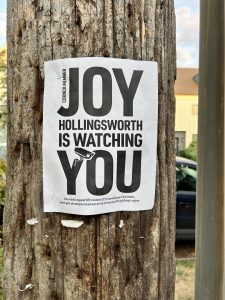
Seattle budget season has offically begun
My Stories:
I’ve published five articles since my last edition of Notes so buckle up.
In August, I wrote about Seattle Councilmember Dan Strauss’s legislative package that would phase out parking for RVs in Seattle. This Tuesday, the package passed out of the public safety committee and will now go on to a full council vote.
For Bolts Magazine, I wrote about a charter amendment on the ballot in Pierce County that would change its sheriff position from appointed to elected. I dived into some of the issues around sheriff accountability in Washington state.
Upon my return from vacation, I’ve written three Seattle-centered stories. First, I wrote about Mayor Katie Wilson’s new executive order promoting budget sustainability and the efficiency of City services and operations. Then I wrote about Wilson’s new gun violence prevention plan. And I covered Wilson’s 2027-2028 proposed budget.
We’ll be talking more about Seattle’s budget as the city council takes it up during their budget season, starting with departmental presentations this week and early next week.
Seattle News:
First off, there’s only been one SODA order issued in Seattle this year, so Seattle City Attorney Erika Evans is keeping her promise in that regard.
Real Escape from the Sex Trade (REST) has expanded from seven to 12 beds for survivors of sex trafficking in Seattle.
DESC’s ORCA center celebrated one year in operation. 65% of people who the Seattle Fire Department’s Health 99 is transporting post-overdose are brought to the ORCA Center for care. The Center is continuing to administer its new three-day long-acting injectable buprenorphine protocol to help people who want opioid disorder treatment.
The city council passed the grocery surveillance pricing ban this week, the first of its kind in the nation. Councilmembers Bob Kettle and Maritza Rivera voted against the legislation.
The new interim SPD Chief Andre Sayles might already be in hot water. The OPA is investigating Sayles and a complaint he made against a detective who spoke at a pro-LGBTQ rally last year.
Speaking of SPD, there are three listening sessions coming up next week regarding the search for a new Seattle police chief in three different geographic areas of the city: the South Seattle session will be on 9/26 at 12pm, the Central Seattle session will be on 9/28 at 6pm, and the North Seattle session will be on 9/30 at 6pm.
I talked about this a bit in my article on Seattle’s new gun violence plan, but the Seattle Times did some great work looking into the City’s contract with TalkSpace, a company providing virtual therapy for Seattle students.
Also related to Seattle schools, Robert Cruickshank recently shared on social media some slides provided for Seattle Public Schools teacher training around AI. You can read SPS’s AI policy here.
Erica Barnett did some excellent reporting on the aftermath of the Bite of Seattle shooting and the communications confusion that happened afterwards, in which she concluded that the bulk of the responsibility for the issues lay with SPD.
While I was out of town, Kettle had Chief Harold Scoggins of the Seattle Fire Department come present to the public safety committee about the fire department’s use of an out-of-state nurse’s line and AI triaging, a service which the fire department adopted without public knowledge. The fire department hasn’t been evaluating the service. However, according to the linked article, not much came from the presentation, at least not yet.
Other news:
The King County Office of the Ombuds conducted an independent investigation of ethics complaints against the county’s Assessor, John Wilson, and found he had made several ethical violations. His staff is calling for his resignation. Wilson isn’t running for reelection and thus will leave office at the end of the year even if he continues to refuse to resign.
The King County Department of Community and Human Services (DCHS) released a blog post last week stating that the department can now confirm that no public funds were lost to fraud in the 19 contracts for youth services flagged for potential issues after a controversial audit. While no fraud has been identified that resulted in the County paying out money, DCHS will be working to recoup $57,817 from four provider organizations due to a lack of documentation that expenses were allowable under their contracts.
Meanwhile, ICE arrests in Washington state reached a new high – 687 – in July, the last full month where we have available data. The Northwest Detention Facility in Tacoma held almost 1,460 people as of mid-August; the facility has a maximum capacity of 1,600.
As of the beginning of September, the University of Washington Center for Human Rights has identified 213 cases in which federal immigration agents conducted arrests on Washington state roads after querying the state’s Department of Licensing database. Governor Bob Ferguson continues to drag his feet in making changes that would prevent this data from falling into ICE’s hands.
Recent Headlines:
- Doctor Doom Thanked Seattle for All the Surveillance Cameras
- Seattle Police Department to end hiring incentives
- DivestSPD: Seattle police kneeled on man who died last week, witness said
- Seattle social justice organizer KL Shannon dies at 59
- Ron Davis: Seattle is so much safer than other big cities
- DivestSPD: Lieutentant’s ‘fuck people up’ remarks will result in discipline
- I’m Leaving Journalism. But I’ll Never Stop Fighting for the South End
- Maritza Rivera Overstates Gun Violence, Pushes Mayor to Pre-Commit to Handpicked “Focused Deterrence” Contractor
- Seattle Breaks Ground on West Seattle RV Safe Lot
- Op-Ed: Seattle Press Are Concocting a False Narrative to Undermine Mayor Wilson
- SPD Officer Alleges Retaliation by Lieutenant at Center of Discrimination Lawsuit
- DivestSPD: Rudeness, not violence earns sergeant a suspension for street vendor’s arrest
- Consultants, New Staffers Fill Out Mayor’s Communications Team
- Seattle economic study finds strong tech assets, a risky concentration, and a tax that ‘penalizes’ hiring
- Downtown Seattle records busiest visitor month in 7 years; worker numbers still down
- Two Senior IT Officials in Seattle Have Left City Service
- DivestSPD: We Heart Seattle’s donors include a ‘race science’ patron and stolen relic traffickers
- Seattle Will Spend $350K to Fund Community Passageways Street Team in Rainier Beach Through June 2027
- Seattle’s Speed Camera Program Enters New Frontier
- Short on shelter, Seattle respite staff discharge patients to the street
- Capitol Hill’s Hudson House apartments to become CoLEAD supportive housing on Summit Ave
- As Seattle festival reveled in Latino culture, ICE swooped in nearby
- Burien Police Department coordinated with a person they believed to be an ICE agent to avoid legal observation
- Zahilay Announces More Than $19.5 Million in New Housing Investments
- Coming in November: A big election for WA’s Supreme Court
- Rights on the ballot
- Free Speech Groups Sound Alarm on “Red Scare” Repression of ICE Watch Activists
- Flock Taught Cops How to Surveil No Kings Protesters
- A Secretive DHS ‘Predictive Policing’ Unit is Analyzing Americans’ Financial Habits and Pulling Them Over
- Anthropic Is Building a Predictive Surveillance System to Monitor Activists
- ICE Plans to Spend Millions on Boston Dynamics Dog Robots
- Atlanta’s “Sanctuary Zones” Are Building a Model for Community Safety: A coalition in Atlanta is building the infrastructure needed to protect their neighborhoods from ICE.
- Cities begin turning off Flock cameras after at least 50 officers reportedly charged with misuse
- It’s Not Just Flock. Police Can’t Be Trusted With Our Data.
- Universal Health Coverage Could Save $1 Trillion and 114,000 Lives Every Year, Yale Study Projects
- Code Switch: Why we’re all being watched